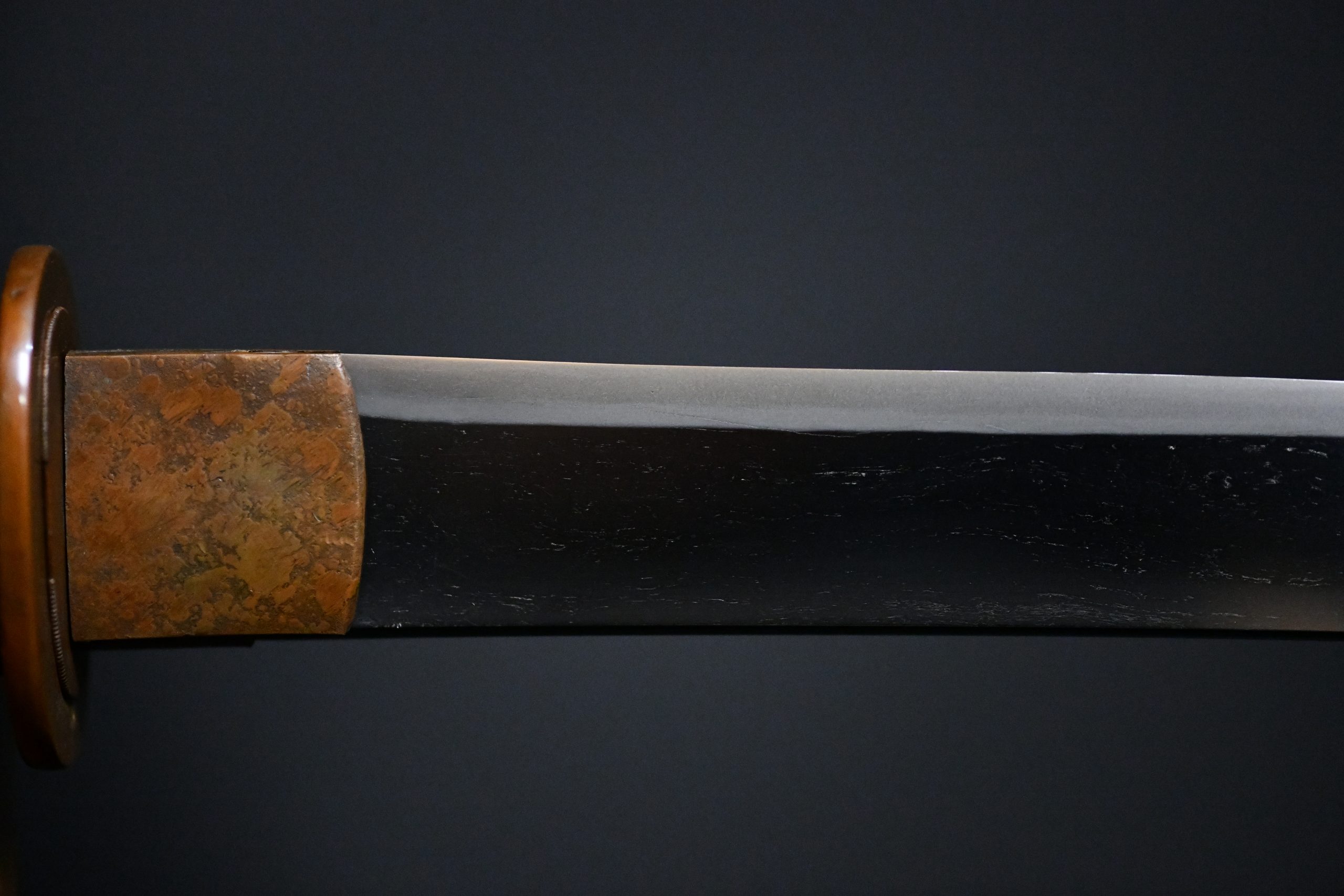
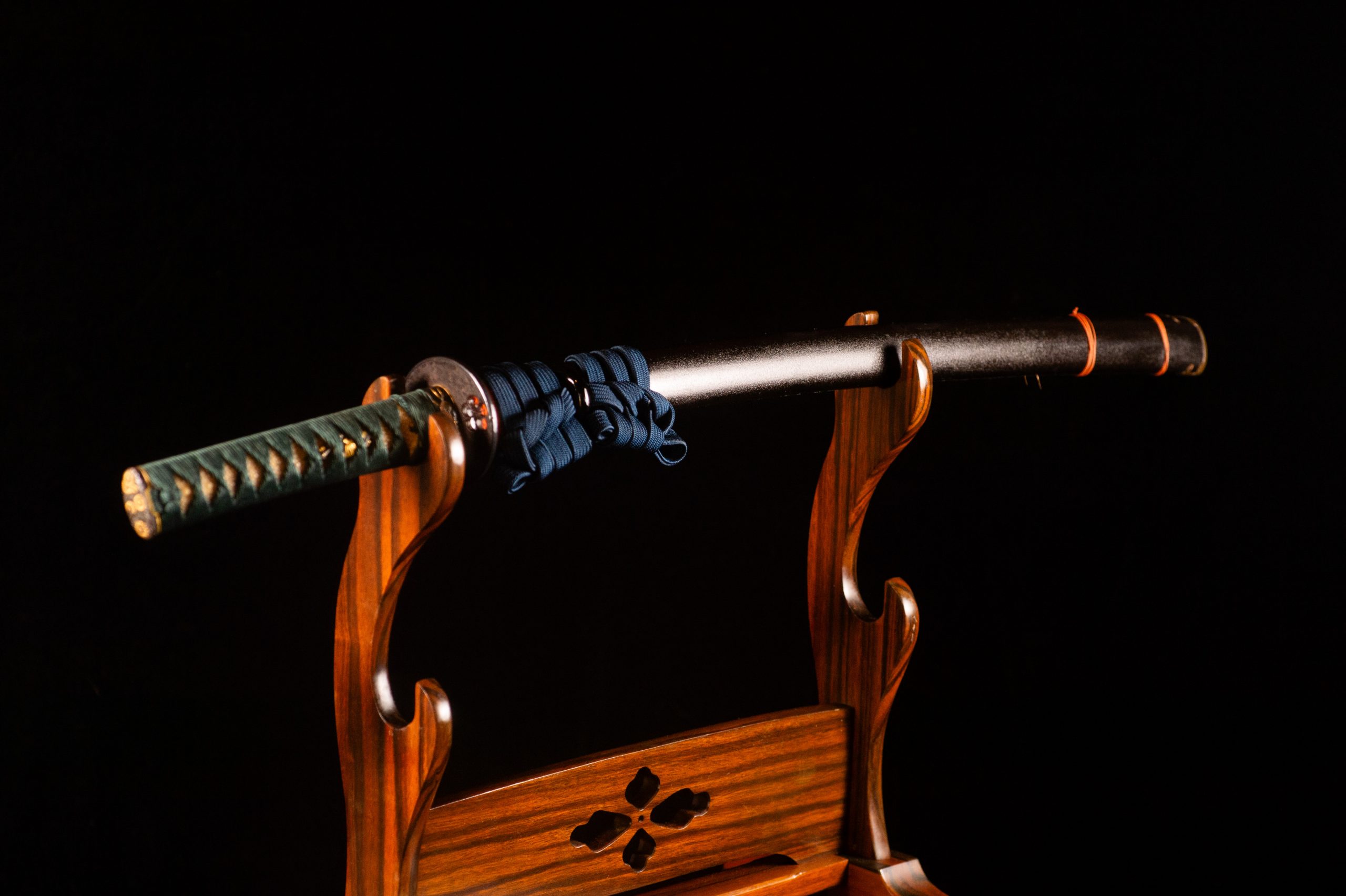
Description ITEM DESCRIPTION: Comes with kimono or cotton bag. Comes with certificate of supein Nihonto. Comes with copy of Tokosusho. Documentation 銃砲刀剣類登録証Firearms and Swords Registration Certificate. 登録記号番号: 愛媛県 第24273号Registration number: Ehime no. 24273 刀剣類 / 刀剣 / 種別: わきざしSword classification: Wakizashi 長さ: 五三・四センチメートルBlade length: 53.4 cm 反り: 二・〇センチメートルCurvature (sori): 2.0 cm 目くぎ穴: (handwritten entry is irregular in the document)The blade itself clearly shows two mekugi-ana (two peg holes). 銘文: 無銘Signature / inscription: Mumei (unsigned) 昭和四十年十月二十九日Registration date: October 29, 1965 愛媛県教育委員会Issuing authority: Ehime Prefectural Board of Education Important: the torokusho date is the Japanese registration date, not the forging date of the blade. Smith / school / period and context Mumei (unsigned).This is an old Japanese blade, with market chronology and typological features consistent with the late Muromachi / early Edo period, later remounted in a Japanese military koshirae from the Shōwa era (Second World War). This type of assembly is especially attractive because it combines two collecting fields in one object: an old traditional nihontō a wartime military guntō koshirae It is a highly desirable category for both Japanese sword collectors and Japanese militaria collectors precisely because of that dual historical identity. Blade Wakizashi with an elegant sugata and pronounced curvature, offering strong visual presence and a clearly traditional overall profile. The 2.0 cm sori gives it a lively and very appealing silhouette. The nakago is mumei and shows two mekugi-ana, entirely consistent with an old blade that has gone through a long mounting history and later adaptation for military use. The blade retains strong historical appeal as an old piece reused in a 20th-century wartime context. It shows age and use-related wear consistent with an authentic blade that has had a real life history, which is entirely normal for this type of example. As a whole, it carries significant value as a historical transitional piece between family sword tradition and modern military service. Koshirae and historical coherence (Second World War military mounting) The mounting corresponds to a Shōwa-period guntō configuration, with typical service/campaign features: Tsuka with brown/khaki tsuka-ito white samegawa floral menuki kashira with sarute ring, characteristic of military mounts gold-toned / brass fittings with floral decoration retention system near the tsuba, typical of military mountings The saya is fitted with a stitched leather field/combat cover with a suspension ring, a practical solution strongly associated with real military use. This detail significantly increases the commercial appeal of the piece, as it reinforces its identity as an actual service-prepared mounting. From a historical-commercial standpoint, the set is highly coherent:old traditional blade functional wartime military remount. About this type of piece (family heirlooms and wartime use) This kind of wakizashi/katana mounted in military fittings reflects a well-known historical reality in wartime Japan: many officers carried old family blades (koto or shintō) mounted as guntō, rather than carrying only modern military-production blades. In many cases, the sword was a family heirloom given to a son going to the front, carrying ideas of lineage, honor, and symbolic protection. In other cases, old blades were also acquired and remounted for service. This is exactly why these pieces are so compelling on today’s market: they are not just militaria, but nihontō with historical biography, linking feudal Japan and 20th-century Japan in a single object. Auxiliary pieces A leather field/combat cover for the saya is present and forms an integral part of the set’s historical identity, adding strong commercial appeal as part of the wartime military mounting. Technical sheet Type: WakizashiSignature: Mumei (unsigned)Blade period: Old blade (late Muromachi / early Edo)Mounting: Guntō (Shōwa era, Second World War)Blade length (nagasa): 53.4 cmCurvature (sori): 2.0 cmMekugi-ana: 2 (visible)Japanese registration (torokusho): Ehime no. 24273Registration date: 29/10/1965Main collecting appeal: combination of an old nihontō blade and an original period military mounting Relacionado