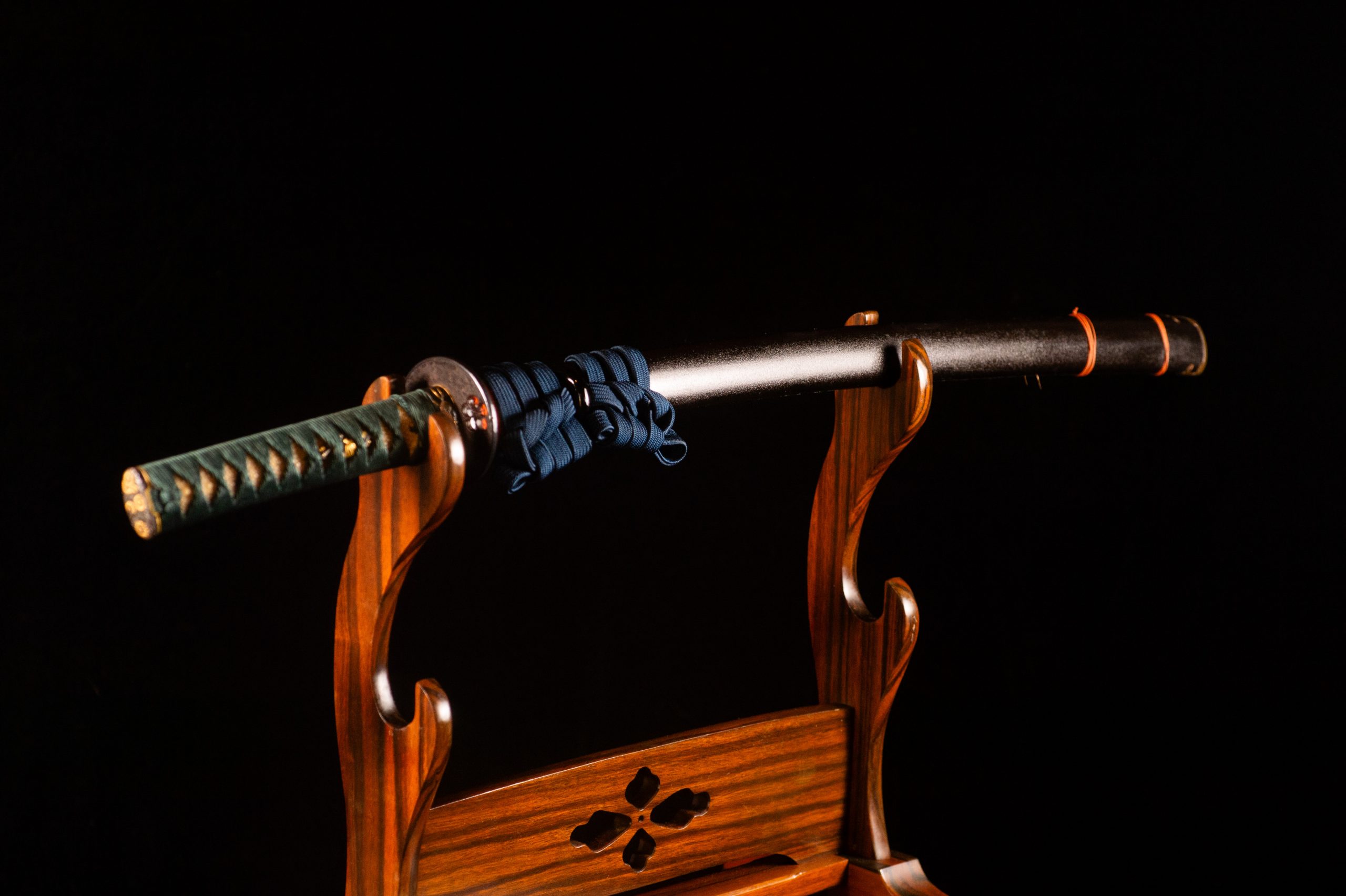
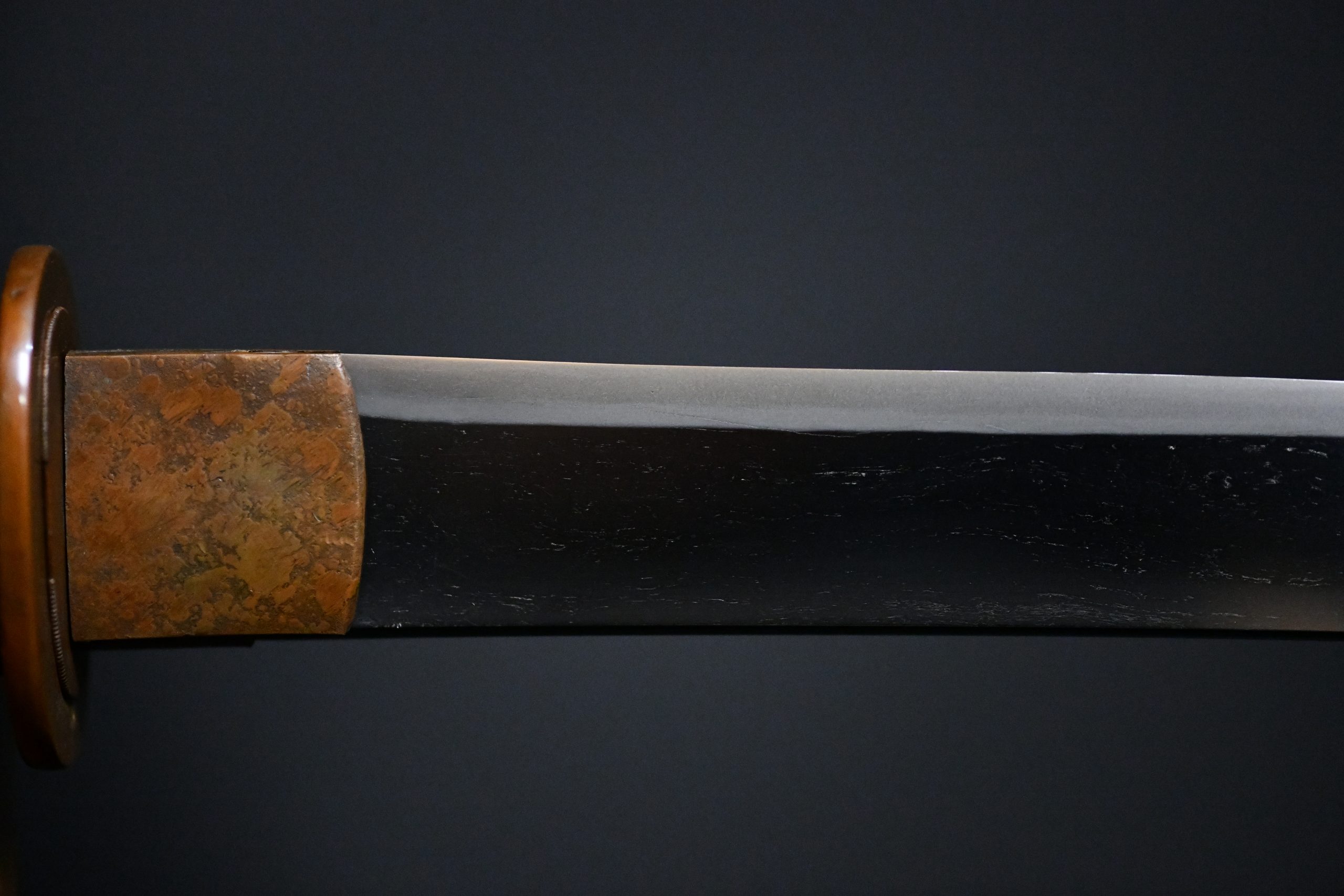
Description ITEM DESCRIPTION: Comes with kimono or cotton bag. Comes with certificate of supein Nihonto. Comes with original prefecture certificate. Historical Narrative This unsigned mumei wakizashi is distinguished by its exceptionally deep curvature of 3.0 cm, an unusual feature for a wakizashi and more often seen in early Kamakura-period tachi. Such a sori indicates that the blade likely began life as a longer sword (perhaps tachi) and was shortened (suriage) during the late Muromachi or early Edo period. These transformations were made to preserve the high-quality steel of earlier eras while adapting the sword to the changing needs and aesthetics of later samurai. Blade Analysis The blade measures 51.7 cm and exhibits a rare, striking 3.0 cm curvature. The hamon is a clean, straight suguha, a hallmark of classical craftsmanship prioritizing elegance and restraint. The hada combines itame and mokume patterns, with clear activity visible throughout the steel. While the polish shows some age-related wear, it still displays the blade’s metallurgical features admirably. The chu-kissaki is well defined and balanced. The tang (nakago) has a single mekugi-ana and is unsigned, confirming its mumei status. This supports the theory of a blade originally forged centuries earlier and reshaped in a later period. Mounting (koshirae) The mounting is of particularly high quality. The fuchi, kashira, menuki, and tsuba are crafted from shibuichi, a prized alloy of silver and copper that darkens beautifully with time. Shibuichi fittings were traditionally reserved for high-ranking samurai and are especially valued among collectors today due to their rarity and beauty. Saya: Dark brown lacquer with a graceful curvature. The green and cream sageo braid enhances the sword’s understated elegance. Tsuka: Brown tsuka-ito over white samegawa, firm and classical in design. Menuki: Made of shibuichi, with subtle vegetal motifs. Fuchi/Kashira: Also in shibuichi, with delicate plant-themed decorations. Tsuba: iron with Shibuichi rim mokkō-gata shape. TECHNICAL SHEET Element Detail Blade type Wakizashi Signature Mumei (unsigned) Nagasa (length) 51.7 cm Curvature (sori) 3.0 cm (rare and pronounced) Hamon Suguha (straight) Hada Itame mixed with mokume Estimated period Late Muromachi – Early Edo Mounting Complete, with shibuichi metal fittings Saya Dark brown lacquer Tsuka Brown tsuka-ito over white samegawa Menuki Shibuichi, vegetal motif Fuchi/Kashira Shibuichi, vegetal motif Tsuba Shibuichi, mokkō-gata with high relief design Registration No. 213461 (Tokyo, April 2025) Includes the original Japanese registration certificate, confirming authenticity and increasing its value as a collectible and historical artifact. Blade is in good condition due to aging just superficial scratchings as normal. Not hagire and not fatal damage, of course. This is a japanese weapon so have a real historical value. This is a weapon with centuries, not machine crafted so can be minor movements of saya, tsuka, tsuba, etc. Because of dilatation, humidity, etc. and little damages propers of his age like small rust, scratches, etc. Relacionado